

Pest education
German Roaches: Why They Keep Coming Back
Key Takeaways
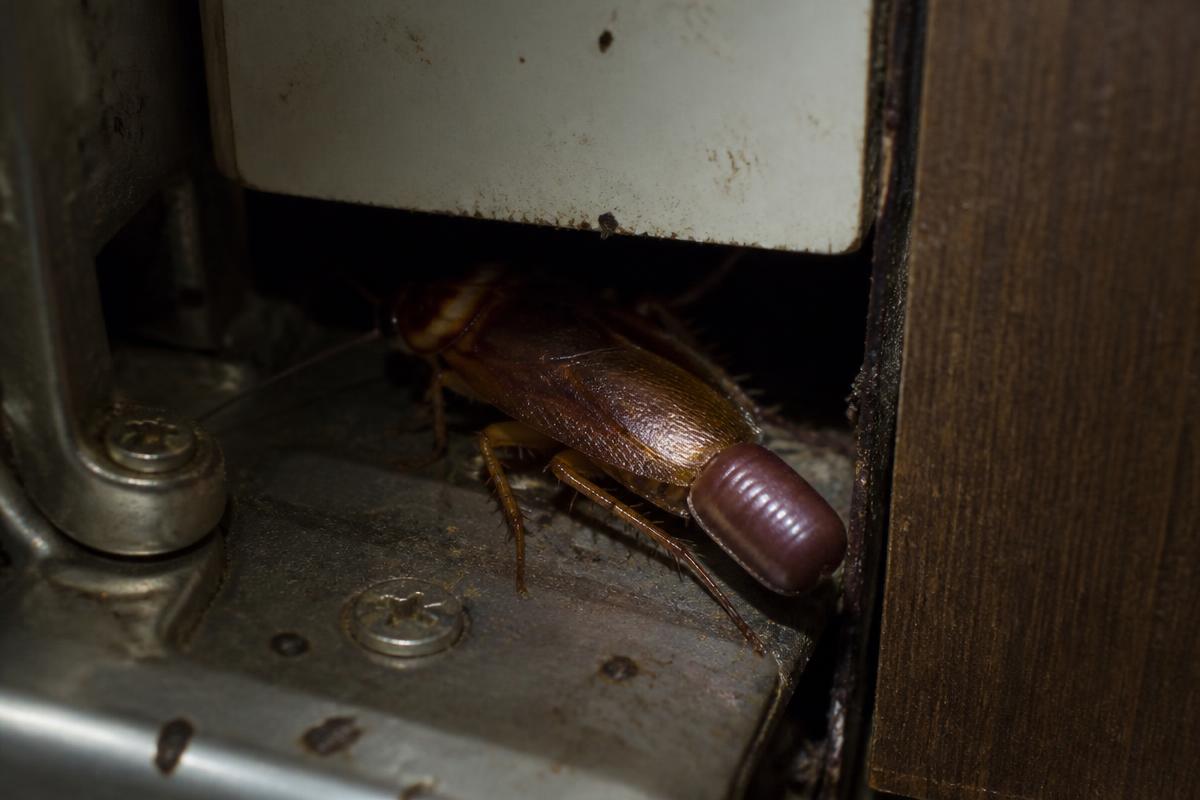
- A single female German roach carries an egg case holding thirty to forty eggs until just before it hatches, and that case is largely protected from spray.
- Foggers push repellent into open air while roaches live deep in tight harborage, which means fogging often drives them into adjoining rooms instead of killing them.
- A real cleanout combines targeted gel bait, an insect growth regulator, vacuuming, and follow-up visits timed to the egg hatch cycle not a single spray treatment.
- Prep matters more for German roaches than for any other common pest, especially clearing cabinets and fixing water leaks before treatment begins.
- Most kitchens see a big drop within two weeks and reach clean between six and eight weeks; anyone promising a one-visit fix is selling the first visit, not a solution.
The Biology Problem Almost No One Understands
German roaches are the hardest common household pest to get rid of, and it isn't close. The reason comes down to one biological fact that most homeowners have never heard: a single female produces an egg case, called an ootheca, holding thirty to forty eggs, and she carries that case attached to her body until just before it hatches. Because the case travels with her into tight harborage rather than sitting exposed anywhere a spray might reach, it's largely protected from whatever treatment was just applied to the kitchen. That's the mechanism behind almost every roach treatment that seemed to work for a week and then completely failed you can knock down every visible adult and still have a full new generation emerge ten days later. Anyone calling around for German roach control in Central Valley after a DIY attempt has usually run straight into this exact biology problem without realizing it.
Understanding this single fact changes everything about how a treatment plan should actually be built.
A one-time spray or bait application, no matter how strong, can only ever address the roaches alive and exposed at that specific moment. It does nothing about the eggs already tucked into a hinge or a motor housing, quietly waiting out their incubation period completely unaffected by anything sprayed nearby.
It's worth pausing on just how fast that math compounds. One female with even a single successful egg case can be responsible for thirty to forty new roaches roughly a week to ten days later. If several females survive an incomplete treatment, the population isn't just recovering it can end up larger than it was before anyone ever picked up a can of spray. That's the trap so many DIY attempts fall into: the visible roaches disappear, the homeowner assumes the problem is solved, and the actual population is quietly multiplying behind the scenes the entire time.
Why Foggers Actually Make the Problem Worse
Foggers, or “bug bombs,” work by releasing pesticide into open air, which sounds thorough but completely misses how German roaches actually live. Roaches spend their time in tight harborage — the motor housing of a dishwasher, the hinge of a cabinet door, the gap behind a refrigerator compressor, the underside of a countertop lip spaces a fogger's mist never really penetrates. UC's Statewide Integrated Pest Management Program specifically warns against using foggers, bombs, or aerosol sprays for cockroach control, noting these products can be hazardous and often repel and disperse roaches into other areas rather than killing them. That warning isn't theoretical: a peer-reviewed study of total release foggers in real infested homes found that foggers failed to meaningfully reduce cockroach populations at all, while a targeted gel bait approach in comparison homes performed dramatically better. A single fogger has been known to turn a manageable kitchen problem into a whole-house or even whole-building infestation, simply by scattering roaches into rooms and units they'd never reached on their own.
| Method | How It's Meant to Work | Real-World Result |
|---|---|---|
| Fogger/ bug bomb | Releases pesticide into open air throughout a room | Rarely reaches harborage; often disperses roaches to new areas |
| Store-bought spray | Direct contact kill on visible roaches | Kills only what it touches; survivors return and can develop resistance |
| Gel bait + IGR (professional) | Roaches carry bait back to harborage; IGR halts reproduction | Targets the colony at its source, including hidden egg cases over time |
What a Real Cleanout Actually Looks Like
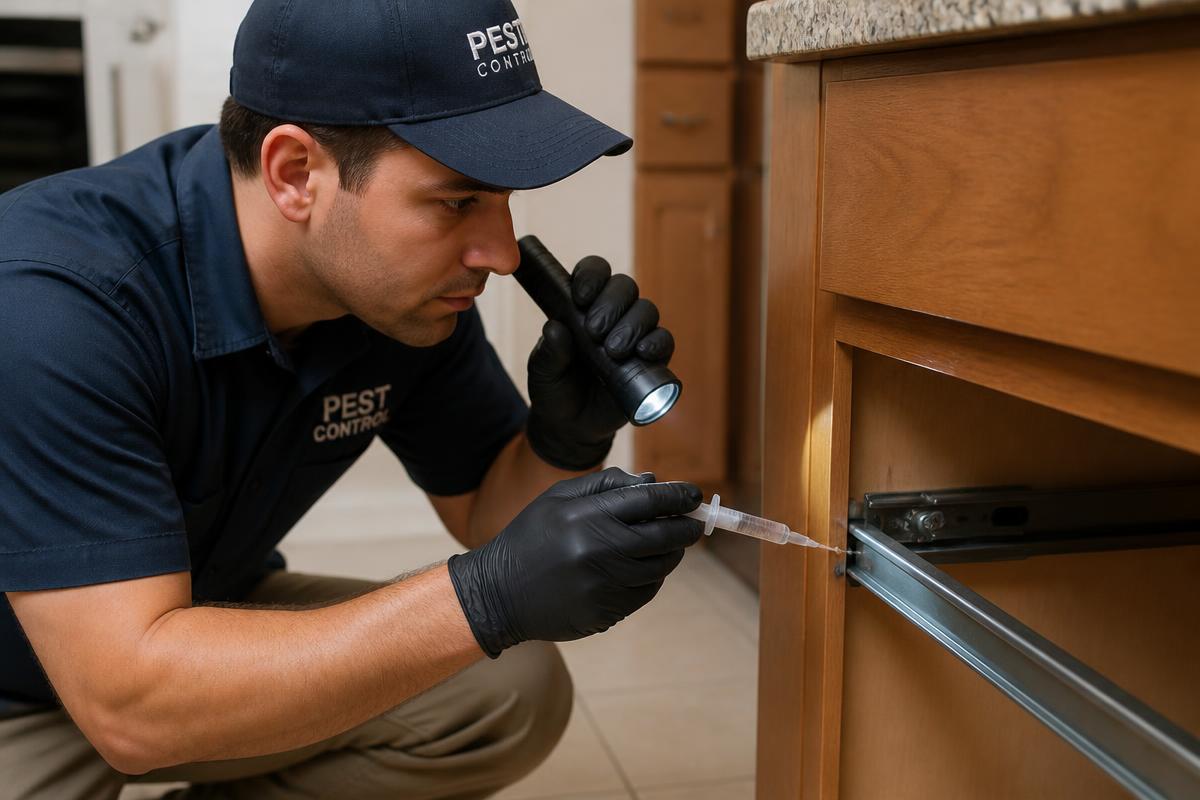
A proper German roach cleanout looks nothing like a single spray-and-go visit. It starts with a detailed inspection, usually with a flashlight and a mirror, to map out exactly where the harborage is hiding throughout the kitchen and surrounding rooms. From there, gel bait gets applied in small, precise placements directly at the edges of that harborage, not sprayed broadly across surfaces. An insect growth regulator goes down alongside the bait so the next generation of nymphs can't reach breeding age even if some eggs do hatch. A vacuum pass physically removes adults and egg cases wherever they can be reached directly. And then, critically, follow-up visits happen at two and four weeks, timed specifically to intercept the egg hatch cycle that a single visit could never account for.
| Cleanout Step | What It Targets |
|---|---|
| Detailed inspection | Mapping exact harborage locations before any product goes down |
| Targeted gel bait | Adult and nymph roaches feeding at harborage edges |
| Insect growth regulator (IGR) | Preventing the next generation from reaching breeding age |
| Vacuum pass | Physically removing adults and egg cases where accessible |
| Follow-ups at 2 and 4 weeks | Catching the new generation as it hatches out |
The follow-up visits aren't an upsell tacked onto the invoice they're the actual treatment. A single visit, however thorough, can never span the full egg cycle on its own, which is exactly why treatments that skip the follow-ups tend to look successful for a week or two before the problem quietly returns.
It's worth being explicit about why the placements themselves matter as much as the product inside them. Broadcasting bait across open countertops or floors doesn't help, since roaches rarely forage in open, exposed spaces the way ants do. Effective bait placement means working along the actual travel paths and harborage edges a technician identified during inspection the underside of a drawer track, the seam behind a baseboard, the gap where a cabinet meets the wall. Precision here matters more than volume.
What We Ask You to Do Before Treatment
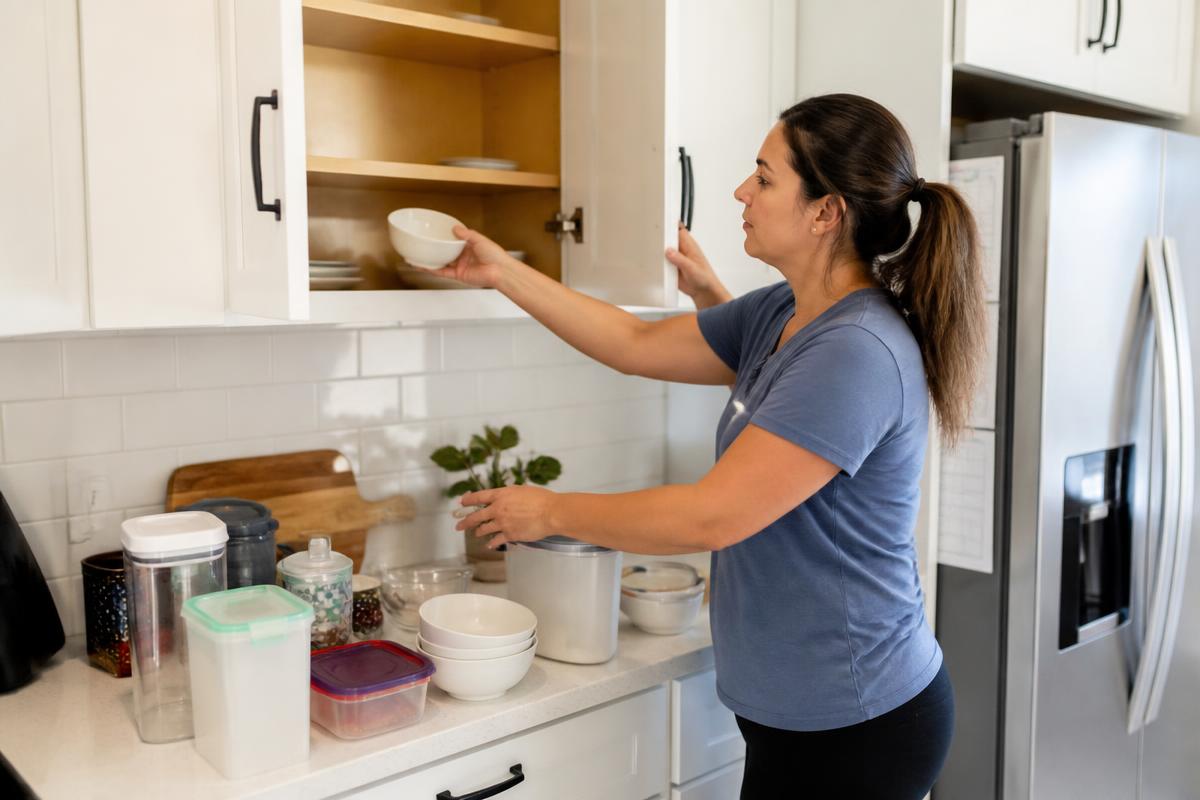
Prep matters more with German roaches than with any other common pest, because so much of the harborage sits inside spaces a technician can't reach without help. Clearing cabinet contents lets a technician actually get into the corners and hinges where roaches hide. Pulling the fridge and stove out, when it can be done safely, exposes harborage that would otherwise stay completely untouched. Fixing any dripping trap or supply line matters just as much as food access, since roaches need water even more than they need food. And it's worth stopping the use of store-bought spray during an active professional treatment, since residual spray near a bait placement can repel roaches away from the very bait meant to reach the colony.
A Realistic Timeline
Most kitchens see a noticeable drop in roach activity within about two weeks of a properly executed cleanout, with the problem reaching genuinely clean somewhere between six and eight weeks out. Heavy or long-running infestations take longer than that baseline, and multi-unit buildings add a layer of complexity since roaches can migrate back in from a neighboring unit that hasn't been treated at all.
| Timeframe | What to Expect |
|---|---|
| Week 1–2 | Noticeable drop in visible adult activity |
| Week 4 | First follow-up visit targets the newly hatched generation |
| Week 6–8 | Most single-unit kitchens reach a genuinely clean state |
| Beyond 8 weeks | Typically reserved for heavy, long-running, or multi-unit infestations |
Why This Approach Actually Works
If someone tells you they can end a German roach infestation in one visit, they're selling you the first visit, not a real solution to the underlying biology. TruBug Pest Control has built its German roach cleanout process specifically around the egg hatch cycle rather than around a single dramatic treatment day, because that's genuinely the only approach the biology actually supports. Family-owned and serving Fresno, Madera, Kings, and Tulare Counties, the process is built to match the timeline the roaches themselves are running on, not the other way around.
FAQs
Frequently Asked Questions
The most common reason is the egg case. A female German roach carries an ootheca holding thirty to forty eggs, largely protected from spray, and if that case hatches after a treatment, a full new generation can appear within about ten days. A single treatment that doesn't account for this cycle almost always looks successful briefly before the problem returns.
Generally, no. Foggers release pesticide into open air, but German roaches live deep in tight harborage that the mist rarely reaches. Research on total release foggers has found they fail to meaningfully reduce roach populations and can actually disperse roaches into new areas of a home, sometimes turning a single-room problem into a whole-house infestation.
Most properly treated kitchens see a significant drop in activity within about two weeks and reach a genuinely clean state between six and eight weeks, since treatment needs to span at least one full egg hatch cycle. Heavy, long-running, or multi-unit infestations typically take longer than that baseline timeline.
This is almost always the egg case cycle playing out. A spray treatment kills visible adults on contact but doesn't affect eggs already protected inside a case, so when those eggs hatch roughly a week or two later, it looks like the infestation “came back” when really the second generation is simply arriving on schedule. This is exactly why professional treatments include follow-up visits timed to intercept that hatch.