
Pest education
Ants vs. Termites: How to Tell the Difference Before It Becomes a Bigger Problem
Key Takeaways
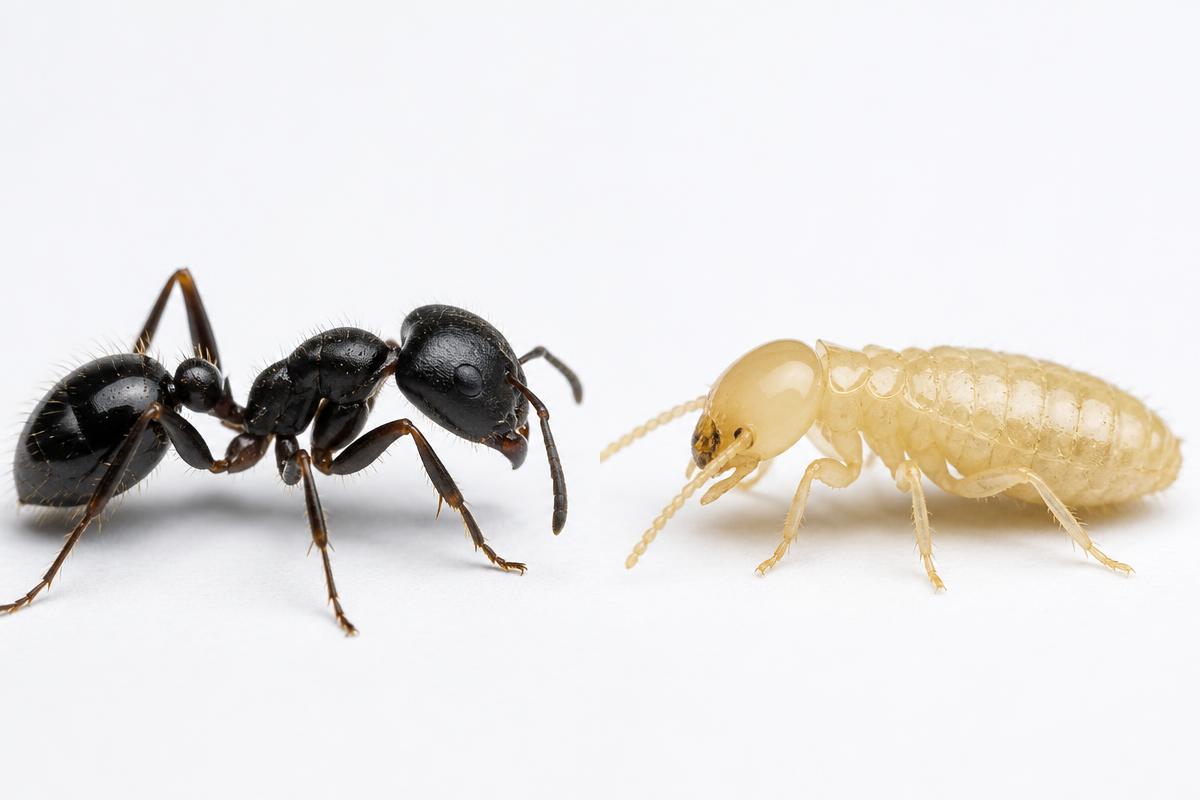
- Ants have a noticeably pinched waist and elbowed antennae; termites have broad, straight bodies and straight antennae.
- Winged ants have unequal wing lengths, while termite swarmers have four wings that are similar in length and shape.
- A pile of shed wings near windows, doors, or other light sources can be an important clue that termite swarmers were present.
- Ants and termites require different identification and management approaches, so guessing the pest can lead to the wrong response.
- When an insect is difficult to identify, a clear close-up photo or professional inspection can help determine what you are dealing with.
Ants and Termites Can Look Surprisingly Similar
If you need professional help identifying or managing household pests, explore central valley's pest services from TruBug Pest Control. Finding a group of winged insects around a window, patio door, or light can be alarming. Ants and termites are both social insects, and their winged reproductive forms can look similar at first glance. The good news is that a few physical features can make the difference much easier to spot.
The original TruBug guidance focuses on three fast checks: the waist, the antennae, and the wings. Those clues are also consistent with guidance from university extension and the U.S. Environmental Protection Agency, which emphasize body shape, antennae, and wing proportions when distinguishing ants from termites.
The Fastest Test: Check the Waist
Start with the insect's body. An ant has a narrow, visibly constricted waist between the thorax and abdomen. It can look almost hourglass-shaped. A termite has a broad, more uniform body without that pinched middle.
This is one of the easiest clues to use when the insect is sitting still. Even if color is difficult to judge, body shape can remain a reliable starting point. Correct identification matters because different pests can require very different management strategies.
Next, Look at the Antennae
Ant antennae are bent or elbowed. Termite antennae are generally straight and appear more bead-like. If you can safely examine a dead insect or a clear photograph, the antennae can provide another strong clue.
Color alone is not a dependable identification method. Ant species can vary considerably in color and size, so a dark insect is not automatically a termite—or an ant. Extension guidance recommends considering several characteristics rather than relying on one feature.
Wings Provide Another Major Clue
Winged ants and termite swarmers both have two pairs of wings, but the proportions differ. Winged ants generally have front wings that are longer than their hind wings. Termite swarmers have four wings that are approximately equal in length. EPA termite identification guidance explains that equal-length wings are one useful clue when distinguishing termites from ants.
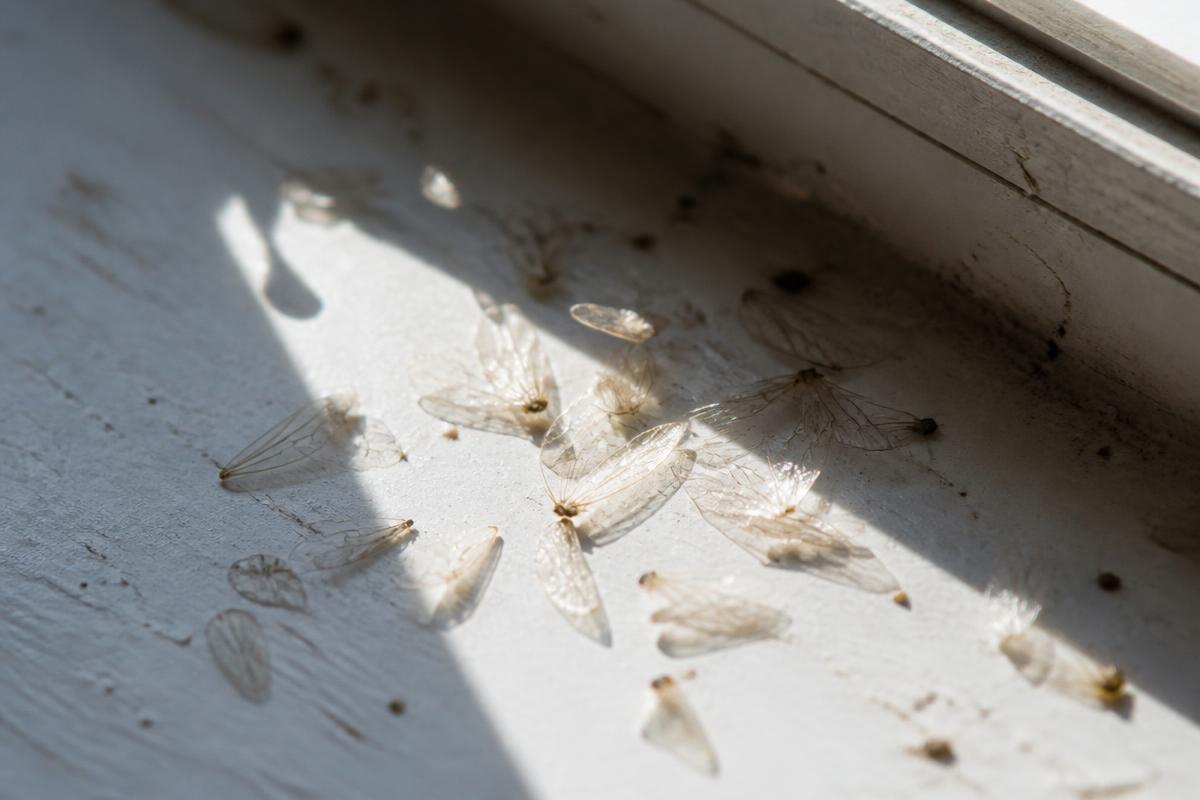
Termite wings can also detach easily after swarming. That means a homeowner may notice loose wings on a windowsill, floor, or near a doorway even when the insects themselves are gone. The EPA specifically notes that termite wings are roughly equal in length, while ants have longer front wings and bent antennae.
| Feature | Ant | Termite |
|---|---|---|
| Waist | Narrow/pinched | Broad; no obvious constriction |
| Antennae | Elbowed/bent | Straight |
| Wings | Front pair longer than hind pair | Four wings roughly equal in length |
| Body appearance | Distinct sections with a narrow waist | More uniform, straight-sided profile |
| Loose wings after swarming | Less characteristic | Common clue near swarm sites |
Identification comparison based on commonly cited extension and EPA identification characteristics.
What Ants Usually Mean for a Home
Ants commonly enter homes while searching for food, water, or shelter. Depending on the species, they may follow moisture, food residues, cracks, slab edges, vegetation, or other access points. Argentine ants are especially known for persistent trails and large interconnected colonies, making a small indoor trail a sign that the broader activity should be considered.
Carpenter ants deserve special attention because they excavate galleries in wood to create nesting space. They do not eat wood the way termites do, but their tunneling can occur in damp or compromised wood. University of Minnesota Extension's carpenter-ant guidance notes that correct ant identification helps determine where the colony is nesting and how it should be managed.
What Termites Mean for a Home
Termites are a different category of concern because they feed on cellulose-containing materials such as wood. The U.S. EPA notes that termites can cause significant structural damage and may remain hidden until a swarm or signs of damage reveal their presence.
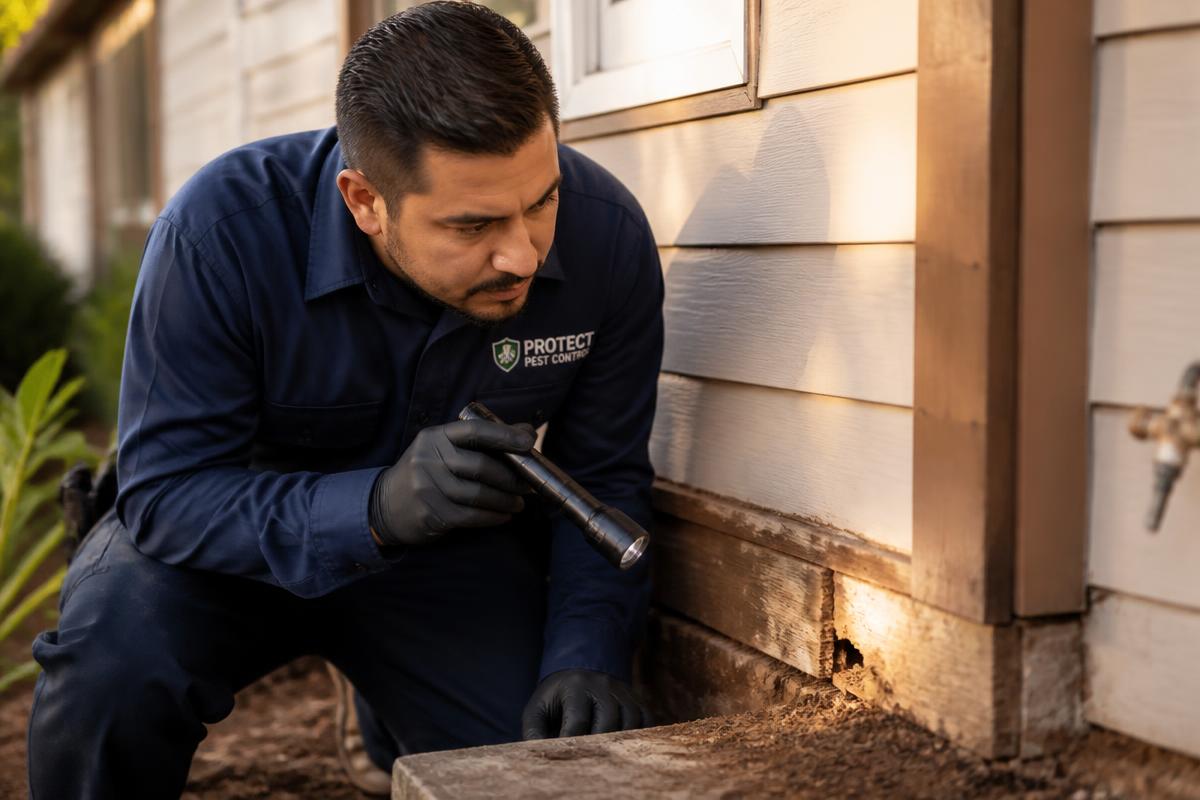
Potential clues can include mud tubes, damaged or hollow-sounding wood, discarded wings, or visible swarmers. However, one sign by itself does not always prove an active infestation. A qualified inspection is the better way to determine what is happening and whether treatment is necessary.
Real-World Identification Facts
| Published fact | Why it matters |
|---|---|
| UMN Extension: ant workers can range from about 1/20 inch to 1/2 inch depending on species. | Size varies widely, so size alone should not be used to identify an ant. |
| EPA: termites have wings that are roughly equal in length. | Equal-length wings are a useful clue when winged insects are found. |
| EPA: termites have straight antennae; ants have bent antennae. | Antennae provide a quick visual comparison. |
| UMN Extension: carpenter ants can excavate wood but do not eat it. | Wood damage does not automatically mean termites are present. |
| EPA: termites often remain hidden until a swarm or damage is noticed. | Visible activity may represent only part of a concealed problem. |
What to Do If You Find Winged Insects
- 1Do not immediately assume that every winged insect is a termite.
- 2Take a close, well-lit photograph before disturbing the insects or cleaning up loose wings.
- 3Look for the three main clues: waist, antennae, and wing proportions.
- 4Check nearby windows, doors, baseboards, wood, and exterior areas for additional signs.
- 5If you cannot confidently identify the insect, ask a pest professional for help rather than choosing a treatment based on a guess.
Why Correct Identification Matters
Ant control and termite management are not interchangeable. The biology, nesting behavior, food sources, and inspection requirements of these insects are different. A targeted approach begins with knowing which pest is actually present.
TruBug Pest Control's existing guidance is intentionally straightforward: if a photo clearly shows an ant, the team can help with ant activity; if the insect appears to be a termite, homeowners should be directed toward an appropriate termite specialist. That distinction helps avoid treating the wrong pest and gives homeowners a clearer next step.
A Simple Five-Second Checklist
| Question | If Yes | Likely clue |
|---|---|---|
| Does the body have a pinched waist? | Think ant | Ant |
| Are the antennae elbowed? | Think ant | Ant |
| Are all four wings about the same length? | Think termite | Termite |
| Are there loose wings near a possible swarm site? | Investigate | Possible termite clue |
| Is the insect still difficult to identify? | Get help | Professional identification |
For dependable pest identification and pest management support, TruBug Pest Control helps homeowners understand the signs of common household pests and choose the appropriate next step.
Frequently Asked Question
How can I tell if the bugs in my house are ants or termites?
Start with the waist, antennae, and wings. Ants have narrow waists and bent antennae, while termites have broader bodies and straight antennae. Winged ants have unequal wing lengths; termite swarmers have four wings that are approximately equal in length.
Do termites look like flying ants?
Yes. Winged termites and winged ants can look very similar, especially during swarming periods. Looking closely at the waist, antennae, and wing proportions is the quickest way to separate them.
What does a pile of discarded wings mean?
Loose wings can be a sign that termite swarmers have emerged and shed their wings. The finding does not by itself confirm an active infestation, but it is a reason to investigate further.
Can carpenter ants damage wood like termites?
Carpenter ants excavate wood to create nesting galleries rather than eating the wood as termites do. Wood damage can have multiple causes, so identifying the insect and assessing the condition of the wood are important next steps.